
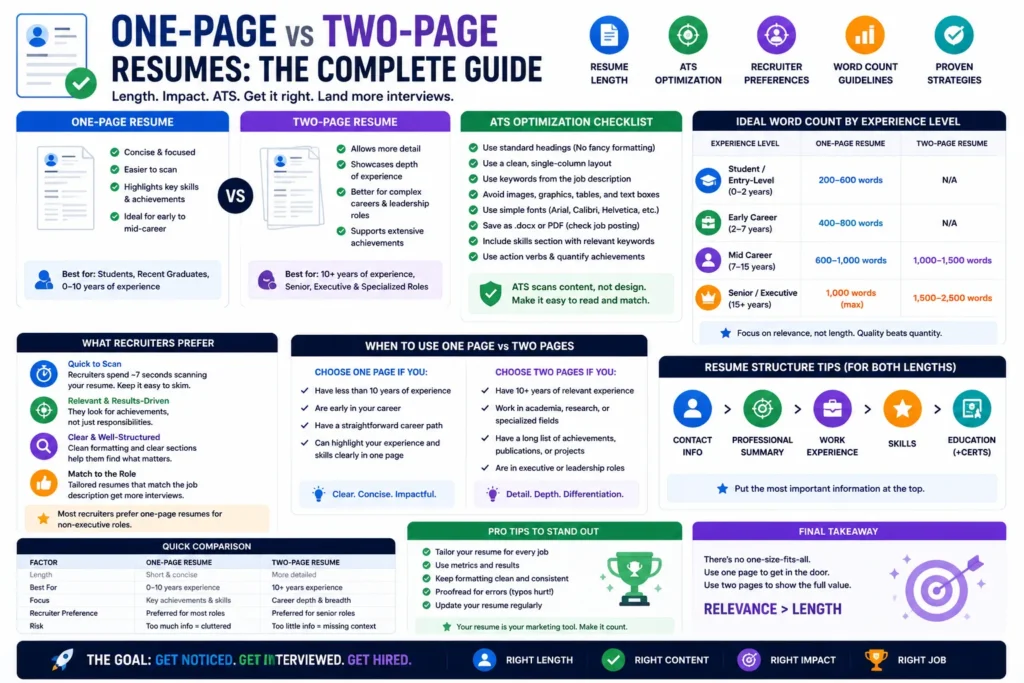
A recruiter scanning dozens of applications is not going to read your resume line by line, they are going to skim it in seconds. Length affects whether that skim lands on the parts that matter. This guide covers when one page is enough, when two pages is fine, and how to trim with the Resume Word/Page Counter.
Try it free: Open the Resume Word/Page Counter, runs entirely in your browser, no account or upload required.
One-page vs two-page resumes
One page is the standard for early-career roles, where you simply do not have fifteen years of history to fit anyway. Two pages becomes reasonable once a role has enough scope and tenure to justify it. Either way, the deciding factor should be relevance, not padding a page out because it feels more substantial.
Length optimization tips
Cut bullets that repeat the same accomplishment in different words. Keep the ones with a number attached (revenue, team size, time saved) over the ones that just describe a responsibility. And drop the roles or projects from a decade ago that no longer say anything useful about what you can do now.
Writing tools resources on ShoutingNow
- Resume Word/Page Counter, free online tool
- Resume Word/Page Counter Guide: One-Page vs Two-Page Resume Strategy, full walkthrough (this article)
- Real-Time Character Counter – No Limit
- Words Per Page