
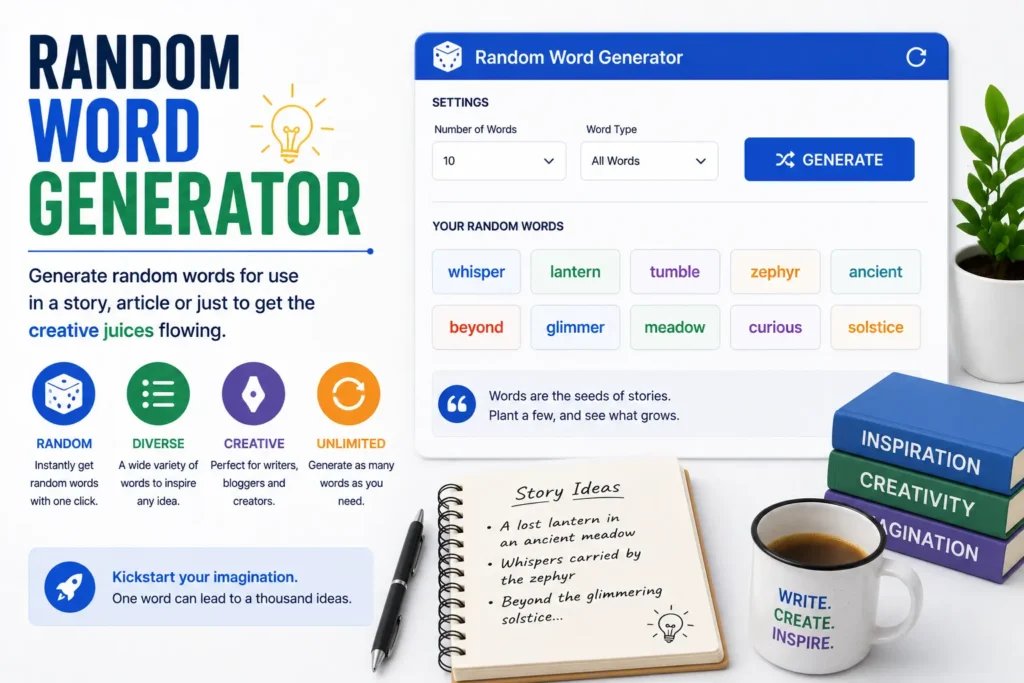
A random word generator surfaces unexpected nouns, verbs, and adjectives so you are not stuck reusing the same writing prompts every week. ShoutingNow’s tool runs in your browser, filter by part of speech, generate a batch, click words to build a custom list, then copy. This guide covers solo warm-ups, classroom games, team icebreakers, and UX placeholder naming without pretending one preset fits every audience.
Try it free: Open the Random Word Generator, runs entirely in your browser, no account or upload required.
What a random word generator is good for
A constraint is often what gets you unstuck. When you have to weave three unrelated words into a paragraph, you stop polishing the opening line and start connecting ideas instead. Random prompts help poets, product marketers, ESL teachers, and facilitators who need fresh vocabulary without spending twenty minutes building a list by hand.
The generator favors general English vocabulary suitable for prompts, not obscure jargon or domain-specific terms. Skim results before projecting them in a classroom or client workshop, and regenerate any word that does not fit your group.
How to use the Random Word Generator
- Choose a part of speech, nouns for object prompts, verbs for action scenes, adjectives for tone exercises.
- Set how many words you need, one to fifty per batch depending on your activity.
- Click Generate, new chips replace the previous batch; click individual words to pin them in your collection tray.
- Copy your list, paste into a doc, slide deck, or chat before the next round.
Solo writing exercises
Try a ten-minute sprint: generate five nouns and two verbs, outline a short post that mentions each term naturally, draft without deleting the forced words, then edit for clarity in a second pass. The goal is momentum, not a publish-ready essay on the first timer.
Songwriters and poets can use adjective-noun-verb triplets as first-line seeds. Pair results with the Capitalize Sentences tool when voice-memo drafts arrive all lowercase before you paste lyrics into a shared doc.
Classroom and workshop activities
| Activity | Setup | Why it works |
|---|---|---|
| Five-minute story | Three random nouns per student | Forces plot connections under time pressure |
| Chain poem | Each line starts with the next random verb | Builds rhythm and shared focus |
| Vocabulary journal | Five adjectives students have never used in writing | Expands active vocabulary with definitions |
| Translation drill | Describe a random object without naming it | Practices circumlocution in language classes |
Game night and team icebreakers
Taboo-style rounds work well with random noun seeds: generate five terms, set a two-minute timer, rotate teams. Remote stand-ups can open with “use this word in your update”, pin five terms, share screen, keep the exercise under five minutes so it does not dominate the meeting.
Build a semester prompt deck by generating fifty nouns once, pasting them into a shared doc, and assigning one per week. Students see fresh vocabulary; you avoid repeating the same list every term.
UX and wireframe placeholders
Designers prototyping interfaces need neutral label text beyond “Lorem ipsum.” Random common nouns populate list rows and card titles during wireframes. Switch to final copy before usability testing, participants often treat nonsense labels as product flaws.
Building and keeping a custom word list
Click individual results to pin them, generate again for alternates without losing pinned words, then copy the batch. Sort long rosters alphabetically with the Alphabetize List tool if you are publishing a printed prompt sheet.
Limits to know
- Not for cryptography, browser randomness suits prompts, not security tokens.
- General vocabulary only, medical, legal, or technical terms may not appear; seed those lists manually.
- Facilitator review, regenerate words that are inappropriate for your audience before you display them publicly.
Start your next prompt
Open the Random Word Generator, pick a part of speech, click words into your list, and write for ten minutes, no outline required.
Writing tools resources on ShoutingNow
- Random Word Generator, free online tool
- Random Word Generator Guide: Prompts, Games & Brainstorming, full walkthrough (this article)
- Capitalize Sentences
- Alphabetize List